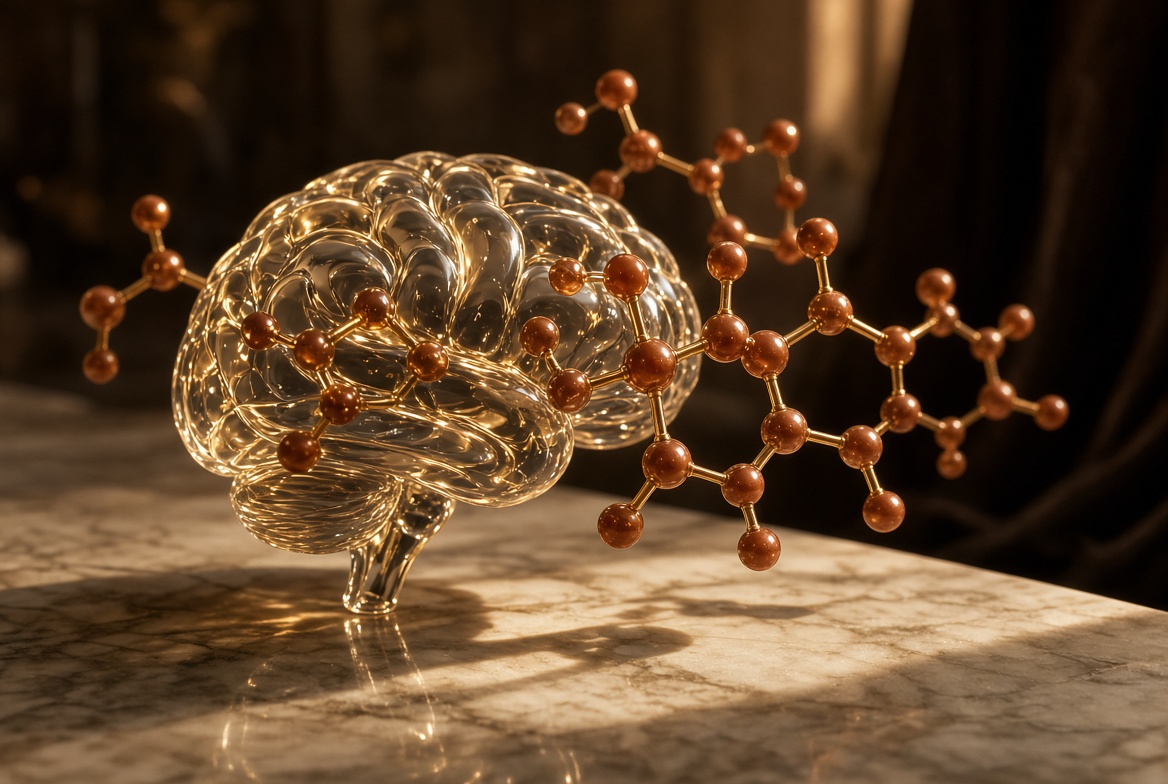
Clinically reviewed education from Umber Health
Inspired by a September 2026 forum in Trends in Endocrinology & Metabolism
Longevity culture treats NAD+ like a missing battery pack for the brain. Raise the number, and memory, focus, and long-term brain health should follow.
The biology is more interesting than that, and more careful.
A September 2026 forum paper in *Trends in Endocrinology & Metabolism* asked a useful question: is boosting NAD+ for brain aging hype, hope, or something that is starting to become real? The short answer is the third option, with conditions. The molecule matters. Blood tests do not prove the brain got the dose. And a higher NAD+ number is not the same thing as a better memory.
What NAD+ actually does in the brain
NAD+ is not a stimulant. Neurons use it to make energy in mitochondria, repair DNA, keep circadian timing, and clear damaged mitochondria through mitophagy.
When NAD+ falls, mitochondrial quality control slips. Inflammation rises. Neurons become less resilient. In Alzheimer’s models, NAD+-dependent enzymes such as SIRT1 sit upstream of both amyloid processing and tau handling. The paper treats NAD+ decline as a shared upstream problem across several neurodegenerative diseases, not a single-disease trick.
Restoring NAD+ toward a physiologic range is a reasonable research target. It is not a guarantee that a capsule will protect cognition.
Does the human brain actually lose NAD+ with age?
In many tissues, NAD+ falls with age. The brain is harder to measure.
The best noninvasive human signal so far comes from 31P-MRS and related work suggesting an age-related drop in brain and cerebrospinal fluid NAD+. Those samples are still small.
Two findings should change how you read a consumer NAD+ test:
- Whole-blood NAD+ can stay stable with age, even when the brain may not.
- Decline is not uniform across the brain. Hypothalamic work found region-specific changes. A systemic number cannot tell you what is happening in the hippocampus or substantia nigra.
Lab artifacts matter too. NADH oxidizes during handling. Hematocrit changes whole-blood values. Mitochondria, cytoplasm, and the nucleus keep separate NAD+ pools. Raising the total cell number does not automatically raise the pool that matters.
A blood NAD+ panel is information about blood. It is not a brain scan.
NR, NMN, and the delivery problem
Nicotinamide riboside (NR) and nicotinamide mononucleotide (NMN) are not interchangeable. They use different cellular entry routes. Oral NR appears in blood quickly and clears quickly, with a half-life around 2.7 hours.
What we still lack: how much oral precursor reaches different brain regions, how neurons versus glia handle it, and head-to-head human trials on brain outcomes rather than blood NAD+ alone.
Short-term NR safety in studied dose ranges has generally been acceptable. Data past two years is still thin. Early work on neuron-derived extracellular vesicles is a research window, not a consumer panel yet.
Where human trials actually stand
Ataxia-telangiectasia
A two-year NR trial reported clinically meaningful improvements in coordination and eye movements. That is one of the longest NAD+ intervention studies to date, in a disease where NAD+ biology is clearly broken.
Parkinson’s
A Phase 1 study in newly diagnosed patients found oral NR increased cerebral NAD+ and upregulated mitochondrial and lysosomal genes. That signal is why Norway launched NOPARK, a Phase 3 trial of high-dose NR in early Parkinson’s (about 400 people, 10 centers). It is not finished.
Mild cognitive impairment
Smaller studies have reported shifts in neurodegenerative markers inside neuron-derived vesicles. A 12-week randomized study in amnestic MCI raised blood NAD+ and left hippocampal blood flow. Memory scores did not meaningfully improve.
Alzheimer’s
Mechanistic links in models are strong. A large, long multicenter trial with hard clinical endpoints has not been completed.ç
Honest map: rare NAD-depleted neurologic disease has shown clinical benefit. Common neurodegenerative disease has biological signals. Everyday midlife “brain fog” is not an established NAD+ indication.
How Umber thinks about NAD+ in a longevity plan
If NAD+ support is on the table, it is one possible layer after the foundations that actually change brain aging risk: sleep, blood pressure, lipids, glucose, muscle, alcohol, hearing, social connection, and hormone status when it is clinically relevant.
NAD+ precursors do not replace a cognitive workup if memory, word-finding, or navigation has changed. We do not use “NAD+ age” as a diagnosis. We do not promise Alzheimer’s prevention.
When we discuss it, the conversation includes the precursor, the dose range studied in humans, the product source, how long it is reasonable to trial, and what we will not pretend a blood number can tell us.
A clearer way to decide
- What problem am I solving: energy, recovery, family history, or a cognitive change that needs evaluation first?
- What evidence applies to that problem, not to a mouse or a rare genetic syndrome?
- What will I measure in three months besides a receipt?
Until larger trials report brain NAD+ and clinical course together, this stays in a precise category: biologically plausible, clinically promising in specific rare disease, unproven as a general anti-aging brain therapy.
BOOK A CONSULTATION if you want that conversation applied to your history and labs.